

Home Maintenance Tips and Troubleshooting for Your Fall Furnace Startup
That First Chilly Michigan Night: Is Your Furnace Ready?
You adjust the thermostat as the indoor temperature drops, but instead of instant comfort, you are suddenly searching for home maintenance tips and troubleshooting because a strange burning smell is filling your hallway. That strange noise from your furnace isn't going away on its own, and the sudden odor can make anyone nervous. When the first freezing October night in Michigan arrives, our team at Hodgson Heating & Cooling knows exactly what happens next: a wave of anxious phone calls. Your heating system wakes up from a long hibernation, and it is completely normal to feel a bit of anxiety when you hear unfamiliar clanks or smell something burning during this initial startup.
The challenge is knowing which of these symptoms are harmless seasonal quirks and which are genuine safety hazards requiring immediate attention. Your heating system has been sitting dormant for months, and firing it up involves rapidly heating metal components, moving large volumes of air, and igniting fuel. If you spent the summer resolving AC temperature inconsistencies, you already know how stressful sudden HVAC issues can be. Now, it is time to make sure your home is prepared for winter by understanding exactly what your furnace is doing.
Understanding the Fall Furnace Startup Cycle
To understand why your furnace acts the way it does in the fall, you have to look at what happens inside the unit during its long off-season. For nearly half the year, your heating system sits completely idle. While the air conditioner handles the summer heat, the internal components of your furnace are just collecting dust.
The Problem: Throughout the spring and summer, airborne particles, pet dander, and household dust circulate through your ductwork. Even with a good air filter, a fine layer of this debris inevitably settles directly onto the furnace's heat exchanger and burners. Furthermore, Michigan's humid summers lead to more dust accumulation on dormant furnace components, causing a more pronounced burn-off smell in the fall. The moisture in the air causes the dust to cling stubbornly to the metal surfaces.
The Cause: When you finally switch your thermostat to "Heat," the system initiates its startup sequence. The burners ignite, and the heat exchanger rapidly warms up, often reaching internal temperatures well over 140 degrees Fahrenheit in a matter of minutes. This sudden, intense heat instantly incinerates the layer of settled dust. Because the blower motor is pushing air over this newly heated metal and distributing it throughout your house, the smell of that incinerated dust is carried into every room.
The Solution: The best approach is preparation and patience. This process is entirely normal for Battle Creek area homes transitioning into the heating season. In our experience keeping local families comfortable, we find that understanding the mechanics of this cycle helps our customers approach their fall furnace startup with confidence rather than panic.
The 'Burning Dust' Smell: Why It Happens and When It's Normal
The most common cause for concern during a fall startup is the distinctive odor that fills the house. However, not all smells indicate a broken system. Knowing exactly what to expect can save you an unnecessary frantic phone call.
Identifying the Normal Scent
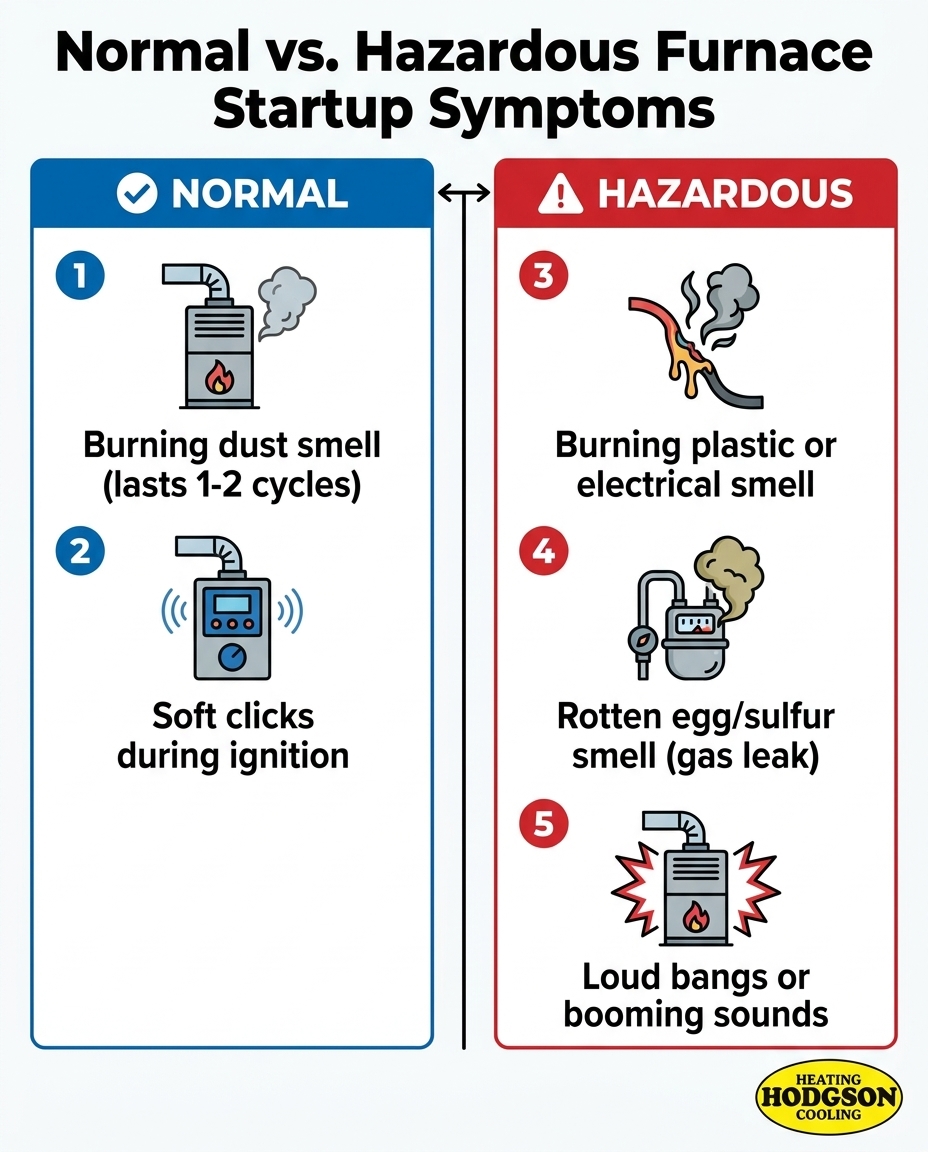
The standard dust burn-off smell is very specific. It often smells like a hot space heater, a warm hair dryer, or slightly singed dust. It is a dry, slightly smoky scent, but it should not smell like melting plastic or harsh chemicals. When the first freezing October night in Michigan forces your system to run its initial heavy cycle, we often remind our clients that this scent is simply the physical evidence of your heat exchanger doing its job and getting hot.
Expected Timeframes
A normal dust burn-off smell is temporary. In most cases, the odor will last for one to two complete heating cycles, which usually translates to a few hours of intermittent operation. If your home has been particularly dusty due to summer remodeling projects or heavy pet shedding, it might linger slightly longer, but it should noticeably fade with each passing cycle.
Simple Ventilation Techniques
If the smell is overwhelming but you are confident it is just dust, you can take a few simple steps to clear the air. Open a few windows slightly to create a cross-breeze, and turn on ceiling fans to help circulate fresh air through the living spaces. Once the heat exchanger is clean, the smell will vanish completely. If the odor continues to grow stronger, changes in character, or refuses to dissipate after a day of running, it is time to investigate further.
Troubleshooting Odors: When a Smell Means Danger
While burning dust is harmless, other odors are clear warning signs of mechanical failure or severe safety hazards. If you detect any of the following smells in Battle Creek area homes, you need to take immediate action.
The Problem: Electrical and Plastic Smells
If your vents are blowing air that smells like burning plastic, melting rubber, or an overheated electrical outlet, this is a major red flag. This odor typically indicates failing electrical components, a seized blower motor that is overheating, or frayed wiring inside the furnace cabinet. Continuing to run a system with electrical issues can lead to severe equipment damage or an electrical fire.
The Cause: Gas Leaks and Sulfur Odors
Natural gas is naturally odorless, but utility companies add a chemical called mercaptan to give it a distinct scent—most commonly described as rotten eggs or sulfur. If you smell rotten eggs near your furnace or coming from your vents, you likely have a gas leak. This is an immediate emergency. Do not turn on lights, do not use your phone near the unit, and evacuate the house before calling your gas provider and a professional HVAC technician.
The Solution: Immediate Shutdown and Professional Help
Carbon monoxide is another critical hazard, but unlike gas or burning plastic, it is completely odorless and invisible. This is why having functioning carbon monoxide detectors installed on every level of your home is non-negotiable. A cracked heat exchanger can allow carbon monoxide to leak into your breathing air. If your detectors sound an alarm, shut the system off immediately and leave the house. Just last season, a local homeowner noticed their heating system behaving unusually; our Hodgson Heating & Cooling technicians arrived promptly, diagnosed a critical safety issue, and explained everything going on inside the unit. Never ignore a harsh chemical or electrical smell, and always trust your safety detectors.
Decoding Furnace Noises: Normal Clicks vs. Hazardous Bangs
Just as your furnace communicates through smells, it also communicates through sounds. The transition from silence to active heating involves multiple moving parts, relays, and expanding metals. Distinguishing between a normal operational sound and a mechanical cry for help is a crucial part of fall maintenance.
Normal Startup Sounds
When the thermostat calls for heat on the first freezing October night in Michigan, a specific sequence of events occurs. First, you will likely hear a soft click from the thermostat itself, followed by a faint whirring sound as the draft inducer motor starts up to clear residual gases. Next comes a series of rapid, soft clicks from the electronic ignition system, followed by a gentle "whoosh" as the gas burners ignite. Once the heat exchanger is warm, you will hear the main blower motor kick on, accompanied by the sound of rushing air through your ductwork. You may also hear occasional light "popping" or "ticking" sounds as the metal ductwork expands with the sudden influx of warm air. All of these sounds are completely standard.
Sounds That Require a Professional
Other noises indicate that internal components are failing, misaligned, or dangerously dirty. Ignoring these sounds will almost always lead to a more expensive repair down the road.
• Loud Bang or Boom — Likely Cause: Delayed ignition (gas building up before sparking) — Required Action: Turn off system; requires immediate professional cleaning and repair.
• Metal-on-Metal Scraping — Likely Cause: Loose blower wheel or failing motor bearings — Required Action: Turn off system to prevent severe motor damage.
• High-Pitched Squealing — Likely Cause: Failing blower belt or unlubricated bearings — Required Action: Schedule a service call before the motor completely seizes.
• Persistent Rattling — Likely Cause: Loose cabinet panels, screws, or internal components — Required Action: Check exterior panels; if secure, call a technician.
Safe Home Maintenance Tips and Troubleshooting Steps
Before you call for professional help, there are several safe, simple steps you can take to ensure your system has what it needs to run properly. Many common heating issues our team sees in Battle Creek area homes stem from minor oversights rather than major mechanical failures. Here is a checklist of safe DIY troubleshooting steps our technicians recommend you perform.
1. Check and Replace the HVAC Air Filter: This is the single most important maintenance task for any homeowner. A clogged, dirty filter restricts airflow. When air cannot flow freely over the heat exchanger, the furnace overheats, triggering a safety limit switch that shuts the system down. Start the season with a brand-new, high-quality pleated filter.
2. Verify Thermostat Settings and Power: It sounds basic, but ensure the thermostat is actually set to "Heat" and the temperature is set higher than the current room temperature. If your thermostat has a blank screen or is unresponsive, swap out the batteries for fresh ones. A dying thermostat can cause erratic furnace behavior.
3. Ensure Vents Are Open and Unblocked: Walk through your home and check every supply and return vent. Make sure the louvers are open. Move any rugs, heavy curtains, or furniture that might be blocking the airflow. Closing vents in unused rooms actually increases pressure inside the ductwork, making your blower motor work harder and reducing overall efficiency.
4. Check the Breaker Panel and Power Switch: If the furnace is completely unresponsive, check your home's main electrical panel to ensure the dedicated HVAC breaker hasn't tripped. Additionally, look for the furnace power switch (which often looks like a standard light switch mounted on or near the unit) and make sure it is flipped to the "On" position.
Routine care prevents mid-winter surprises. For example, when our clients sign up for preventative maintenance, our technicians provide a thorough annual inspection that keeps their units in top shape year after year. Preventative maintenance is always less stressful than an emergency repair.
When to Turn It Off: Expert, Prompt Diagnostics
There is a distinct line between basic troubleshooting and dangerous tinkering. You should never open the furnace cabinet to attempt wiring repairs, adjust gas pressure, or bypass safety switches. If you suspect a gas leak, smell an electrical fire, or hear the loud boom of delayed ignition, your next step is simple: turn the system off at the thermostat and call for help.
When the first freezing October night in Michigan hits, you want the confidence that your system will run safely. Scheduling an annual inspection before the deep freeze arrives allows a technician to clean the burners, check the electrical connections, and visually inspect the heat exchanger for microscopic cracks. This professional intervention provides peace of mind, ensuring your family's safety without feeling like a high-pressure sales situation.
When you rely on the Hodgson Heating & Cooling team for seasonal service, you'll find that having prompt, friendly technicians who work hard makes all the difference in restoring your comfort. Relying on expert diagnostics means you get accurate answers quickly, preventing small wear-and-tear issues from turning into complete system failures. Because our versatile HVAC team handles seasonal transitions seamlessly, if you still need to contact our AC repair technicians for lingering summer issues, or if you are ready for your fall heating tune-up, help is just a phone call away.
Frequently Asked Questions About Fall Furnace Startups
Is it normal for a furnace to smell when first turned on for the winter?
Yes, a slight burning smell is completely normal during the first startup of the season. This happens because dust and debris settle on the heat exchanger during the summer months when the unit is idle. When the furnace fires up, it incinerates this dust, creating a temporary odor. In our years servicing Battle Creek area homes, we always remind customers this is a standard part of the seasonal transition.
How long should a furnace smell when first turned on?
The normal dust burn-off smell should only last for one to two heating cycles. This typically translates to a few hours of intermittent operation. If the smell persists for more than a day, or if it suddenly grows stronger, you should turn off the unit and have it inspected to ensure there is no restricted airflow or overheating component.
What noises are not normal for a furnace?
Loud bangs, metal-on-metal scraping, and high-pitched squealing are not normal. A loud boom indicates delayed ignition, which can severely damage the system, while scraping or squealing usually points to failing motor bearings or a loose blower wheel. If you hear these noises, shut the system down immediately to prevent further damage.
Why does my heater smell like burning plastic?
A burning plastic or electrical smell indicates a serious mechanical or electrical issue. This odor is often caused by melting wire insulation, an overheating blower motor, or a failing capacitor. You should never ignore an electrical smell; turn off the furnace at the thermostat and breaker, and contact a professional immediately.
What does a cracked heat exchanger sound like?
A cracked heat exchanger itself doesn't always make a distinct sound, but it is sometimes accompanied by rattling noises or a change in the way the burner flames sound. You might also hear a sudden shift in airflow or notice that the flames flicker wildly when the blower motor turns on. Because a cracked heat exchanger can leak carbon monoxide, professional diagnostics are essential.
How can I safely test my furnace before the first freeze?
You can safely test your furnace by setting the thermostat to "Heat" and raising the temperature a few degrees above the current room temperature. Listen for the normal sequence of clicks, the burner igniting, and the blower fan engaging. Ensure warm air is coming from the vents and that any initial dust smell dissipates quickly. If the system fails to start or exhibits warning signs, schedule a service call early.
Stay Warm and Safe This Winter
Transitioning into the heating season doesn't have to be a stressful event. By understanding the fall furnace startup cycle, you are now equipped to distinguish between harmless dust burn-off and genuine safety hazards. A little temporary odor is normal, but strange mechanical noises, electrical smells, and unresponsive thermostats are clear signals that your system needs attention.
For Battle Creek area homes, staying proactive is the best way to ensure reliable comfort. Don't wait for a breakdown in the middle of a blizzard. Take the time to replace your air filter, test your system early, and schedule a professional inspection with Hodgson Heating & Cooling to keep your equipment running safely and efficiently all winter long.


