

Managing Humidity in Battle Creek's Historic Homes Before Winter Hits
The Hidden Threat to Vintage Architecture This Fall
The calendar flips to September, the evenings get a sudden chill, and before you know it, the air inside your house feels uncomfortably dry. Managing humidity in Battle Creek's historic homes before winter hits is a common challenge that property owners often overlook until the physical damage is already done. Sharp temperature drops are a hallmark of a Michigan fall, forcing residential heating systems to cycle on much earlier than expected. This sudden shift creates a hidden, rapidly accelerating threat inside older houses.
When the heat turns on during the September fall transition, it instantly begins stripping natural moisture from your indoor air. Acting early prevents the severe dry-air issues that typically plague vintage properties by the time January arrives. If you are noticing the air drying out, taking proactive steps now can save your home's interior from irreversible damage. At Hodgson Heating & Cooling, our team has spent years helping local property owners evaluate their unique climate needs before the freezing weather sets in.
Why Older Architecture Loses Moisture So Quickly
Modern houses are built like sealed plastic envelopes, designed to trap treated air inside. Vintage properties, on the other hand, were designed to breathe. When our technicians service homes in the Battle Creek historic districts, a pattern we see often is that these vintage properties lack the modern vapor barriers and advanced insulation found in new construction. This architectural reality allows moisture to escape through the walls, original window casings, and stone foundations with surprising speed.
The physics of cold air make this structural breathability a distinct disadvantage in the colder months. Cold outdoor air physically holds less moisture than warm air. When that frigid, dry air infiltrates a drafty historic home, it creates a powerful vacuum effect. The dry air pulls whatever residual moisture is left inside your living spaces straight out through the microscopic gaps in your home's envelope. While the natural ventilation of a 19th-century house is fantastic for summer cooling, it becomes a major liability the moment indoor heating begins.
• Vapor Barriers — Modern Construction: Standard plastic house wrap prevents moisture transfer. — Historic Architecture: None; natural materials allow rapid moisture exchange.
• Air Exchange Rate — Modern Construction: Low; tightly sealed against drafts. — Historic Architecture: High; prone to the stack effect and drafty windows.
• Moisture Retention — Modern Construction: Retains indoor humidity easily during winter. — Historic Architecture: Loses indoor humidity rapidly as soon as heating begins.
The Impact of Early Furnace Cycles
The drying process accelerates exponentially during intermittent heating in early fall. When your furnace cycles on to combat a chilly October morning, it heats the existing air but adds absolutely zero moisture to it. This thermal process causes the relative humidity inside the house to plummet. While the outdoor temperature shift happens gradually over several weeks, the indoor humidity drop happens in a matter of days, catching both the homeowner and the building materials completely off guard.
The stack effect: In multi-story vintage homes, warm air naturally rises to the upper floors and escapes through the roof or attic. This upward movement creates negative pressure on the lower levels, pulling in cold, bone-dry air through the basement and foundation. This continuous cycle means your furnace is constantly heating new, dry air, further depleting the moisture levels inside your living spaces.
Defending Original Plaster and Antique Woodwork
The true charm of the properties located in the Battle Creek historic districts lies in their unique, irreplaceable architectural details. However, original lath-and-plaster walls, antique hardwood floors, and custom wooden trim are incredibly sensitive to environmental changes. The Environmental Protection Agency (EPA) Indoor Air Quality guidelines recommend keeping indoor relative humidity between 30% and 50% year-round to maintain a healthy environment for both occupants and the building itself.
When indoor air drops below that 30% threshold, hygroscopic materials begin to suffer. Hygroscopic materials are those that naturally absorb and release moisture from the surrounding air, such as vintage wood and traditional plaster. National Park Service preservation briefs strongly emphasize the need for stable indoor environments to protect historic woodwork from permanent structural degradation.
If your home's relative humidity remains uncontrolled, you will likely notice several troubling symptoms:
• Shrinking wood: Hardwood floors contract, leaving wide, drafty gaps between the original boards.
• Cracking plaster: Original plaster walls lose their structural moisture, becoming brittle and developing long spiderweb cracks.
• Separating joints: Antique door frames, wooden staircases, and original window sashes pull apart at the seams, requiring expensive carpentry repairs.
• Squeaky floors: As the structural wood dries and shrinks, floorboards rub against loosened antique nails, creating loud creaks underfoot.
In our experience working with Battle Creek's heritage properties, preventing this damage through proper atmospheric management is always a more effective strategy than notoriously expensive and time-consuming restorations.
Why the Early Fall Window is Critical for Intervention
A common misconception among homeowners is that humidifiers are only necessary when there is heavy snow on the ground and temperatures drop below zero. In reality, the fluctuating temperatures of a Michigan fall catch many property owners completely unprepared. The most drastic drop in your home's relative humidity actually occurs during the initial shift to indoor heating during the September fall transition.
By the time deep winter arrives, the damage to your home's interior is already well underway. The wood has already shrunk, and the plaster has already cracked. Stabilizing your moisture levels early prevents the cumulative stress on these delicate materials that becomes painfully obvious by January. In our daily service calls, we emphasize that intervening before the furnace runs around the clock gives your home's materials time to adjust to a consistent, healthy climate.
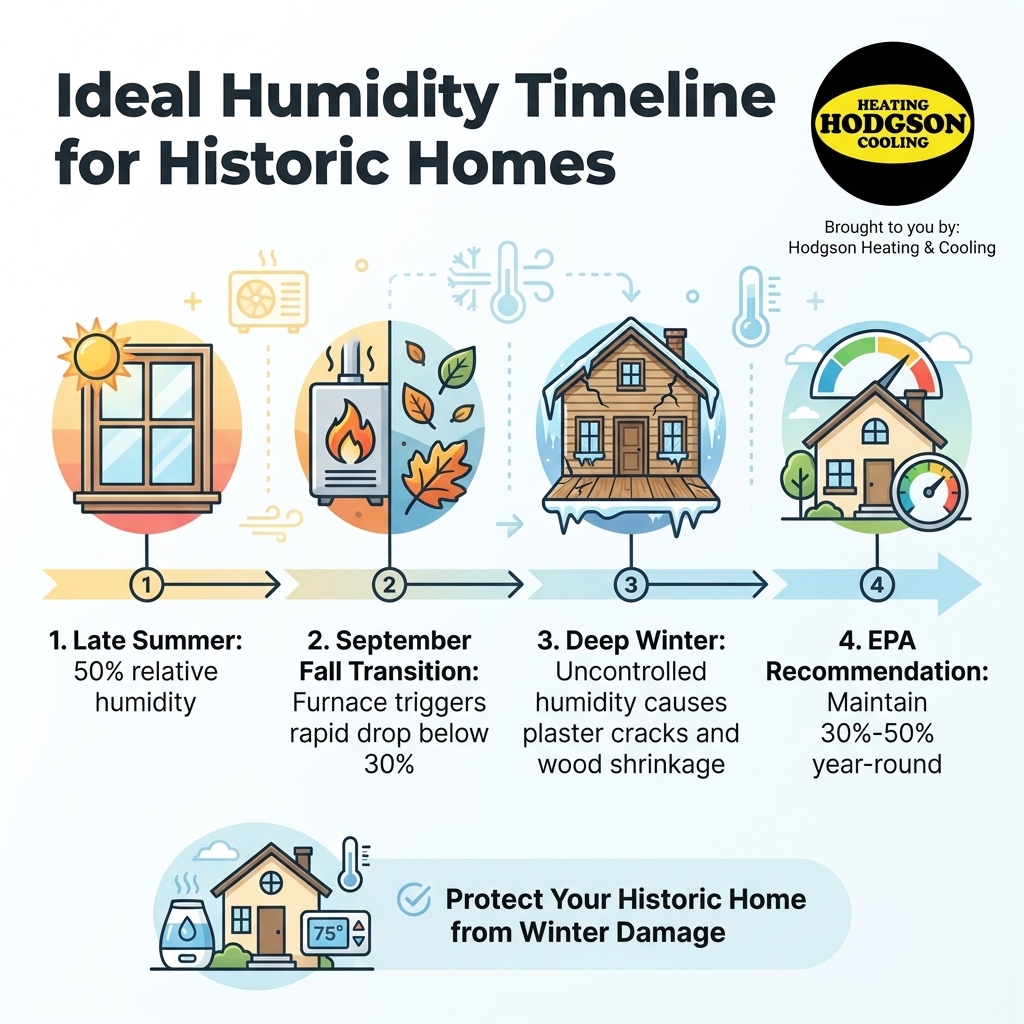
The timeline of moisture loss:
1. Late Summer: High outdoor humidity keeps indoor levels comfortable, often masking the home's drafty nature.
2. September & October: The furnace turns on for chilly mornings. The air is heated without added moisture, causing relative humidity to crash below 30%.
3. November: Wood and plaster begin surrendering their internal moisture to the dry indoor air, starting the shrinking process.
4. January: The furnace runs continuously. Visible damage appears in the form of cracked walls and separated trim.
Retrofitting Whole-Home Solutions Without Compromising Integrity
Trying to humidify a multi-story, drafty older house with portable units is a losing battle. Portable humidifiers require constant refilling, only treat isolated rooms, and fail to provide the even, consistent moisture distribution a vintage property demands. If you own a home in the Battle Creek historic districts, we highly recommend a whole-home system that treats the entire structure simultaneously.
Whole-home humidifiers can be integrated directly into your existing forced-air heating setup. There are several technologies available, including bypass humidifiers that use the furnace blower to distribute moisture, fan-powered units that operate independently of the HVAC fan, and steam humidifiers that boil water to inject pure steam directly into the ductwork. We often find that steam systems are highly effective for large, drafty historic homes because they can produce significant amounts of moisture rapidly.
The most important factor is protecting the architectural integrity of the house during installation. You need a team with deep local expertise in servicing historic homes to ensure that ductwork modifications, plumbing lines, and equipment placements do not damage original structural features. Our knowledgeable technicians will evaluate your specific layout and recommend a solution that operates quietly in the background without requiring invasive renovations.
Proper air filtration works hand-in-hand with moisture control. A whole-home system ensures that airborne dust—which increases significantly when the air is dry and brittle—is captured effectively. Learning about choosing the right HVAC air filter ensures your equipment runs efficiently while delivering perfectly balanced, clean air to every room in the house. When filtration and humidification work together, the indoor air quality of a vintage home can rival that of a brand-new build.
Preparing Your Vintage Heating System for the Shift
Humidity control relies entirely on the health, efficiency, and airflow of your primary heating equipment. Before your system runs continuously, our team strongly recommends a comprehensive fall furnace inspection. During the September fall transition, technicians assess exactly how your specific heating unit interacts with indoor moisture levels and overall ventilation.
One local homeowner experienced the value of proactive, comprehensive service firsthand with our team. During a recent summer cooling call, they needed immediate help when their air conditioning stopped working properly. While our technician, Brian, was on-site to repair the AC unit, the homeowner wisely opted to have their vintage furnace serviced on the exact same day. By addressing both the cooling repair and the heating maintenance in a single visit, the homeowner ensured their entire climate system was fully prepared for the upcoming seasonal shift.
What our professionals check during a fall inspection:
• Airflow dynamics: Ensuring the blower motor is strong enough to distribute humidified air evenly across multiple floors and long duct runs.
• Thermostat calibration: Verifying that temperature sensors and separate humidistat controls are communicating correctly with the main equipment.
• Safety controls: Checking older heat exchangers and venting systems for safe operation, ensuring no carbon monoxide risks are present.
• Filter housing: Confirming that the filter slot is properly sealed so that dry, dusty air from the basement is not being pulled into the living spaces.
Working with professionals who understand the nuances of older residential systems ensures your equipment operates safely without over-drying the house.
Navigating Efficiency and Comfort in Older Michigan Homes
Upgrading the climate systems in a vintage property often feels like a delicate balancing act. Property owners want to maintain historic preservation while simultaneously achieving modern indoor air quality standards. Fortunately, proper humidity management actually makes a home feel significantly warmer, which directly impacts your daily comfort and your energy consumption.
The science behind this is straightforward: moist air retains heat better than dry air, and it slows the evaporation of moisture from your skin. When your home stays within the recommended 30% to 50% humidity range, you can often lower your thermostat by a few degrees and feel just as comfortable. This simple adjustment reduces the daily strain on vintage heating systems, lowering your overall energy usage and extending the lifespan of your blower motor and heat exchanger.
If your current furnace is struggling to keep up with the demands of the Battle Creek historic districts, it might be time to consider a full system upgrade. General energy rebates, federal tax credits, and utility incentives are frequently available for homeowners installing high-efficiency, climate-controlled HVAC systems. These programs can help offset the investment of modernizing your home's heating and indoor air quality equipment. We always advise our customers to verify current programs with their local utility provider or a tax professional to see what general incentives apply to their specific property.
Stabilize Your Home's Climate Before the Freeze: Managing Humidity in Battle Creek's Historic Homes Before Winter Hits
The window to protect your property is narrowing quickly. Managing humidity in Battle Creek's historic homes before winter hits is the absolute best way to defend original woodwork, prevent plaster cracks, and improve your daily comfort. Do not wait for the deep freeze to set in and the physical damage to become visible on your walls and floors.
Relying on the professional, locally-contextualized advice from Hodgson Heating & Cooling ensures your vintage property gets the exact care it requires. By acting during the September fall transition, you secure a stable, comfortable environment for the entire heating season. Schedule an inspection with our team today to assess your home's specific moisture control needs and keep your historic architecture safe all winter long.
Frequently Asked Questions
How do you control humidity in an old house?
The most effective way is to install a whole-home humidifier that integrates directly with your central HVAC system. This ensures moisture is distributed evenly across all floors, unlike portable units that only treat single rooms. Additionally, sealing major drafts around original windows and doors helps keep the humidified air inside the building envelope.
When should I turn on my whole house humidifier in Michigan?
You should activate your humidifier as soon as your furnace begins running regularly, which is typically during the early fall transition in September or October. Turning it on early prevents the initial, drastic drop in indoor moisture that shocks wood and plaster. Monitor your humidistat to keep levels between 30% and 50%.
Why is my historic home so dry in the winter?
Historic homes lack modern vapor barriers and are naturally drafty, allowing warm, humid air to escape while pulling in cold, dry outdoor air. When your furnace heats this dry incoming air, the relative humidity plummets. The constant cycling of the furnace accelerates this drying process throughout the entire structure.
What should indoor humidity be in winter in Michigan?
The EPA recommends maintaining indoor relative humidity between 30% and 50%. In the dead of a Michigan winter, you may need to keep it closer to 30% or 35% to prevent condensation from forming on older, single-pane windows, while still providing enough moisture to protect your woodwork.
Can a whole-home humidifier be installed in a home with original plaster walls?
Yes, a whole-home humidifier can be safely installed without damaging original plaster. The unit is mounted directly to your existing furnace and ductwork in the basement or utility room. The humidified air is then circulated through your existing vents, requiring no invasive cutting into your historic walls.
How does early furnace use impact indoor air quality in vintage homes?
Early furnace use rapidly dries out the air, which increases the amount of airborne dust and allergens circulating through the house. Dry air also dries out your nasal passages, making occupants more susceptible to fall allergies and cold symptoms. Proper humidification and filtration counteract these negative impacts immediately.


