

Diagnosing That First-Run Furnace Smell: What is Normal and When to Turn It Off
The Anxiety of the First Fall Furnace Cycle
October in Michigan brings a sudden, biting chill that signals winter is fast approaching. When that first October cold snap hits, thousands of homeowners head straight to their thermostats to kickstart their heating systems for the season. But within minutes, a distinct burning odor fills the hallways. Diagnosing that first-run furnace smell: what is normal and when to turn it off is a critical skill for every homeowner facing this exact situation.
Experiencing a burning odor during this initial heating cycle almost always causes immediate panic. At Hodgson Heating & Cooling, our dispatchers field countless calls every fall from residents faced with a critical decision: do you assume it is just harmless dust burning off, or do you shut the system down to prevent a potential disaster? Making the wrong choice can lead to unnecessary emergency service calls, or worse, leaving a dangerous electrical or gas issue unchecked.
The Psychology of the Furnace Smell Panic
It is entirely natural to feel anxious when your heating equipment produces a strange scent. We are hardwired to react to the smell of burning, as it usually signifies danger. When that scent comes from the basement or utility closet, the instinct is to panic. However, understanding the basic science behind these odors is the key to making a safe, confident decision.
Your heating system is a complex machine that relies on combustion or high-voltage electricity to generate heat. Because it operates at such high temperatures, any foreign debris inside the unit will react immediately. By learning how to distinguish between the harmless scent of settling dust and the sharp, acrid warning signs of a failing component, you can protect your home and your peace of mind during that first seasonal temperature drop.
Why Your Heat Exchanger Collects Summer Dust
To understand why your furnace smells like it is burning, you have to look at what happens during the off-season. In our years of servicing Battle Creek area homes, we see firsthand how heating systems sit completely idle from May until late September or October. During these long spring and summer months, the internal components of your heating system are essentially acting as a resting place for household debris.
Airborne particulates, pet dander, lint, and standard household dust naturally settle deep inside your ductwork and directly onto the surface of the heat exchanger. The heat exchanger is the core component of your furnace—it is the metal shield that safely transfers heat from the combustion chamber into the air that blows through your vents.
The Role of Humid Michigan Summers
Michigan's famously humid summers play a massive role in this annual phenomenon. The excess moisture in the indoor air causes dust particles to clump together and stick stubbornly to the metal surfaces of your idle heat exchanger. Instead of just blowing away harmlessly, this humid dust forms a thin, clinging layer over the equipment.
When the furnace fires up for the first time in the fall, the heat exchanger rapidly reaches extreme temperatures. The accumulated, slightly damp debris instantly incinerates upon contact with the hot metal. Because the blower fan activates right after the heat exchanger warms up, the smell of this incinerated dust is immediately pushed through your ductwork and out of every vent in the house, creating a highly noticeable odor.
Identifying Normal: The Scent and Timeline of Burning Dust
Not all burning smells are cause for alarm. In fact, the vast majority of calls our HVAC technicians receive during an October first-run cold snap turn out to be completely normal dust burn-off. The key to staying calm is knowing exactly what this normal process smells like and how long it should last.
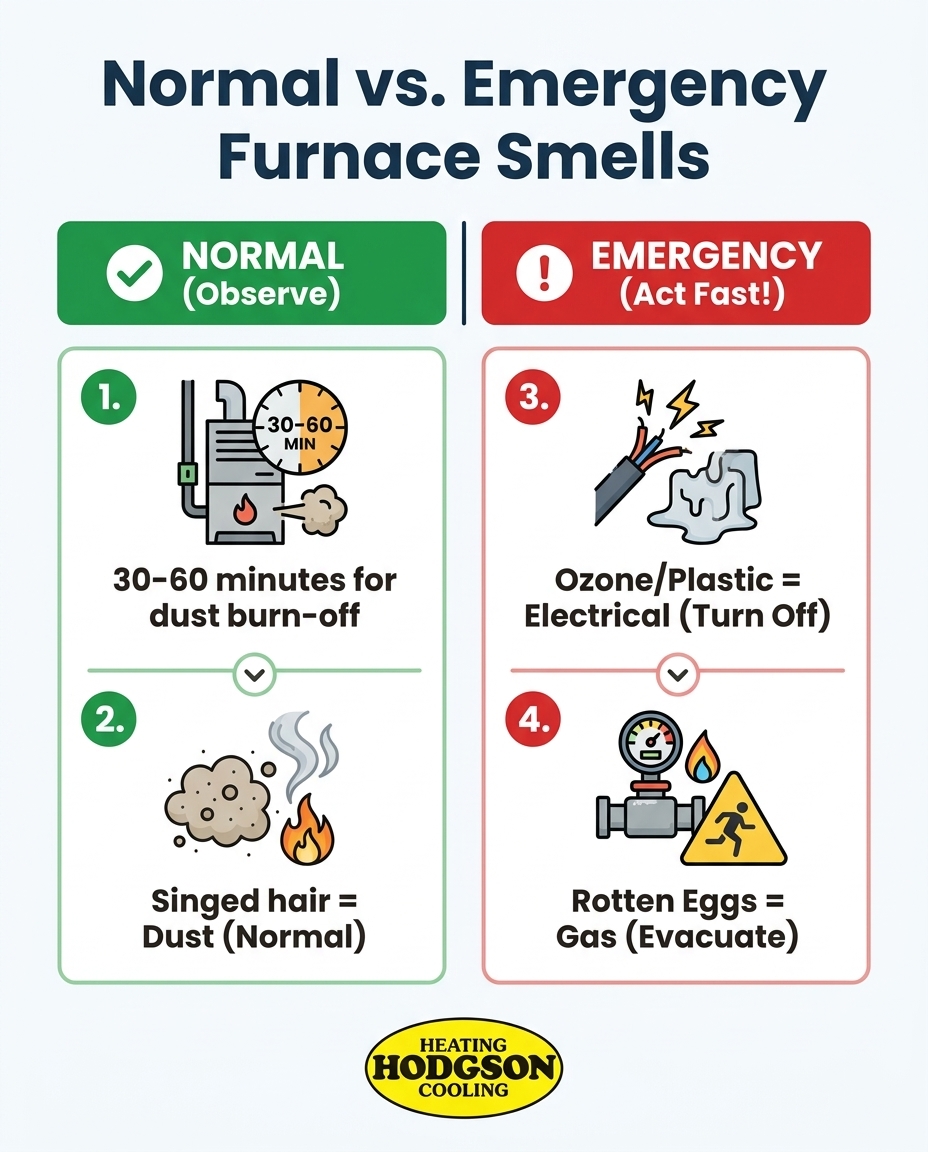
Normal burn-off has a very specific sensory profile. It does not smell like chemicals or melting wires. Here is what you should look for:
• The Scent of Warm Dust: The most common description is a dry, dusty smell, similar to a vacuum cleaner that has been running for a long time.
• Singed Hair: If you have pets, the dander and hair that settled on the heat exchanger will smell briefly like singed hair when it incinerates.
• A Slightly Metallic Odor: As the metal heat exchanger rapidly expands during its first heating cycle in months, it can produce a faint, warm metallic scent.
The 60-Minute Timeline Rule
The timeline of the odor is just as important as the scent itself. A healthy heating system will process this dust very quickly.
• The Peak: The odor should be at its absolute strongest within the first 10 minutes of the heating cycle.
• The Fade: After 15 to 20 minutes, the smell should noticeably begin to dissipate as the dust turns to ash and clears the system.
• The Resolution: A healthy system will clear the smell entirely within 30 to 60 minutes of continuous operation.
If you are confident that the smell is just dust, you can open a few windows temporarily. This will help ventilate the home and clear the air while the furnace finishes its initial burn-off cycle.
Warning Sign #1: Electrical, Plastic, and Ozone Odors
While dust is harmless, other odors require immediate action. Electrical issues produce a sharp, acrid scent that is impossible to ignore. If you smell something that reminds you of melting plastic, burning rubber, or a fishy, ozone-like odor, you are not dealing with normal seasonal dust.
These specific scents indicate serious internal problems within the heating equipment. Common culprits include compromised wiring that is beginning to melt its insulation, a failing capacitor that is leaking fluid, or an overheating blower motor that is drawing too much amperage. This is especially relevant if you are running your modulating furnace fan continuously throughout the season, as the motor endures significant wear over time.
The Danger of Ignoring Ozone Odors
Continuous operation under these conditions risks severe equipment damage. If a blower motor continues to overheat, it can seize up entirely, leading to a cracked heat exchanger or a total system failure. More importantly, melting wires pose a severe risk of an electrical fire.
If you detect this sharp, chemical scent in your Battle Creek area home, the immediate action is simple: turn the system off at the thermostat right away. Do not wait to see if the smell goes away, and do not attempt to open the furnace cabinet to investigate the wiring yourself. Shutting off the power at the thermostat stops the flow of electricity to the failing component, preventing further damage until a professional can assess the situation.
Warning Sign #2: The Distinct Smell of Rotten Eggs
Of all the odors a heating system can produce, the smell of rotten eggs is the most critical. Natural gas is naturally colorless and odorless. Because an undetected gas leak is incredibly dangerous, utility companies add a harmless chemical compound called Mercaptan to the gas supply.
Mercaptan produces a highly recognizable, pungent sulfur or rotten egg smell. This odor is designed to be detected by the human nose even at extremely low concentrations, ensuring that homeowners are alerted to a leak long before the gas reaches volatile levels.
Immediate Steps to Take During a Gas Emergency
Smelling rotten eggs during an October first-run cold snap is an absolute emergency. It indicates a potential gas leak near the furnace, the gas valve, or the main gas lines running through your home. If you notice this scent, you must follow strict safety protocols.
Homeowners must NEVER attempt to diagnose, locate, or repair gas issues themselves. Do not turn the furnace off at the thermostat, do not flip any light switches, and do not use your cell phone while inside the house, as any tiny spark can ignite the gas. The correct action is to evacuate the home immediately, leaving the doors open behind you to allow ventilation. Once you are safely outside and away from the property, contact your local gas utility provider or emergency services immediately.
What to Do If the Burning Smell Lingers Past 60 Minutes
Sometimes, the smell coming from your vents is strictly dusty and normal, but it simply refuses to go away. If the odor persists beyond that crucial 60-minute mark, your system is likely struggling with an airflow restriction. When a furnace cannot pull enough cool air in or push enough warm air out, the internal temperature rises higher than intended, causing the dust burn-off to continue indefinitely.
One local homeowner experienced exactly this last fall and reached out to our team for same-day service. Our very own Technician Rick arrived that afternoon, quickly identified the root of the airflow problem, and had the system running smoothly before evening. If you find yourself in a similar situation, there are a few safe troubleshooting steps you can take before making that call.
1. Check the Air Filter: A heavily soiled filter from the long summer cooling season is the number one cause of restricted airflow. If the filter is caked in gray dust, it acts like a wall, forcing the furnace to work harder and run hotter. Turn off the system, slide the filter out, and replace it if it is dirty.
2. Inspect All Supply and Return Vents: Walk through every room in your house and ensure that no vents are blocked. Furniture, heavy rugs, or long curtains pushed over a vent can severely restrict airflow, trapping heat inside the ductwork and prolonging the burning smell.
3. Verify Vents are Fully Open: Closing vents in unused rooms does not save energy; it actually increases the static pressure inside your ductwork and makes the blower motor work harder. Ensure all louvers are fully open.
4. Call for Professional Assessment: If you have replaced the filter and opened all vents, but the dusty smell still lingers after another 30 minutes of operation, you have a deeper issue. Persistent odors after basic airflow checks indicate a problem that requires professional assessment from our team.
When in Doubt, Rely on Professional Odor Triage
It is always better to be safe than sorry when dealing with combustion equipment during the first cold snap. Many homeowners hesitate to call for help because they worry the smell might just be normal dust, and they don't want to feel foolish for overreacting. However, a rapid response for dangerous odors is a core part of professional HVAC service, and our technicians will never make you feel silly for prioritizing your family's safety.
During a routine fall inspection, one customer was concerned about potential odors and overall system health. Our expert technician, John Rybarczyk, performed a thorough inspection, checked the combustion chamber, and took the time to answer all of the homeowner's questions, providing vital peace of mind for the long winter ahead.
What Happens During a Professional Odor Diagnosis
Professional technicians have access to diagnostic tools that go far beyond the human nose. We use combustion analyzers to check for trace amounts of carbon monoxide and unburned gas. We use multimeters to test the exact electrical draw of the blower motor and capacitors, pinpointing the source of an ozone smell before a component visibly melts.
Routine fall inspections often catch these failing components before they create frightening smells or result in a mid-winter breakdown. Having an expert evaluate the system ensures that every wire is tight, the heat exchanger is intact, and the burners are firing cleanly.
Don't Ignore Your Furnace's Warning Signs This Fall
As the temperatures drop across Battle Creek area homes, your heating system becomes the most important appliance in your house. At Hodgson Heating & Cooling, we believe that understanding the difference between normal summer dust burning off and the urgent warning signs of a failing system empowers you to keep your home safe and comfortable.
Always remember the 30-to-60-minute rule for normal dust burn-off. If the scent is dry and dusty, give it an hour to clear. But never hesitate to shut down the system immediately if electrical, plastic, or ozone odors are present. Most importantly, if you smell rotten eggs, evacuate immediately.
Don't wait until a strange smell turns into a complete system failure in the dead of winter. Schedule a professional tune-up and inspection with our team today to ensure your heating system is clean, safe, and ready to handle whatever this season brings.
Frequently Asked Questions
How long should a furnace smell like burning dust?
A normal dust burn-off smell should dissipate within 30 to 60 minutes of the first heating cycle. The odor typically peaks during the first 10 minutes as the heat exchanger reaches its maximum temperature. If the dusty smell persists for several hours, it usually indicates a dirty air filter or restricted airflow causing the system to run too hot. Always check your filter if the smell lingers past the one-hour mark.
What does an electrical fire in a furnace smell like?
An electrical issue in a furnace produces a sharp, acrid scent often described as melting plastic, burning rubber, or a fishy ozone smell. This distinct odor is caused by melting wire insulation, a failing capacitor, or an overheating blower motor. If you detect this smell, you should immediately turn the system off at the thermostat to prevent further damage or a potential fire.
What to do if furnace smells like gas?
If your furnace smells like rotten eggs or sulfur, you must evacuate the home immediately. This scent is caused by Mercaptan, a chemical added to natural gas to alert homeowners to a leak. Do not turn off the thermostat, do not flip any light switches, and do not use your phone inside the house. Once you are safely outside, call your gas utility company or 911.
Is it normal for a heater to smell like burning plastic?
No, it is never normal for a heating system to smell like burning plastic. While a dry, dusty smell is common during the first run of the season, a plastic odor indicates that an internal electrical component or wire casing is actively melting. You should shut the system down immediately and contact a professional HVAC technician to diagnose the electrical fault.
Can a dirty air filter cause a burning smell?
Yes, a severely clogged air filter can absolutely cause a persistent burning smell. When the filter is packed with dirt, the furnace cannot pull enough air through the system, causing the internal components to overheat. This excessive heat continuously burns the dust inside the unit, prolonging the standard burn-off odor well beyond the normal 60-minute window.
Why does my furnace smell dusty every time it kicks on?
If your furnace smells dusty every single time it cycles on, rather than just during the first run of the season, your ductwork or filter may be heavily soiled. It can also indicate that the system is pulling in dirty air from an unsealed return duct in a basement or attic. Replacing your air filter and having your ductwork professionally inspected can usually resolve this recurring odor.


